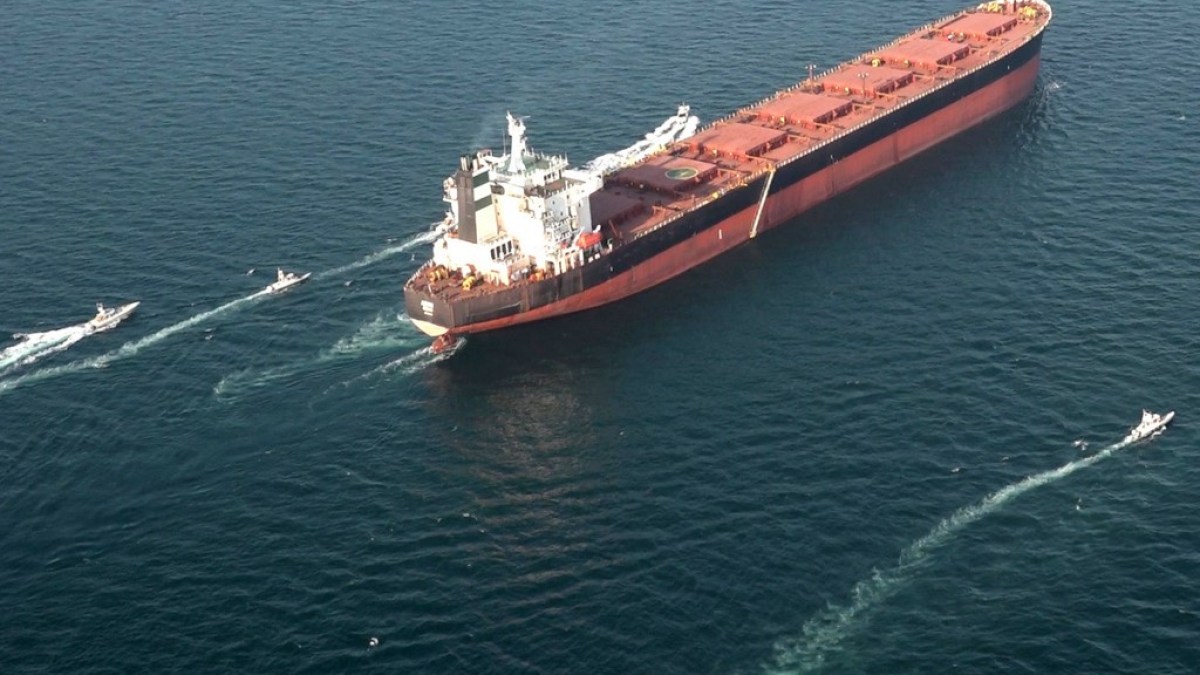
The Strait of Hormuz: Global Shipping's Volatile Chokepoint Amidst Escalating Regional Tensions
The Strait of Hormuz, a narrow waterway connecting the Persian Gulf to the open seas, stands as one of the world's most critical maritime chokepoints. Far more than just a geographical feature, its strategic importance is magnified by the ever-present specter of iran regional tensions, turning it into a barometer for global energy security and international stability. This vital artery, though claimed territorially by both Iran and Oman, is universally recognized as an international waterway, crucial for the global flow of oil and gas. Yet, its fate often hangs in the balance, tethered to the complex and often hostile dynamics between Iran and major world powers, particularly the United States.
For nations like the United Arab Emirates and other Gulf states, unimpeded access to this route is not merely an economic convenience but an existential necessity. Any disruption, perceived or real, sends ripples across international markets, underscoring the delicate balance between geopolitical maneuvering and the imperative of maintaining safe passage through this irreplaceable maritime gateway. Understanding the Strait of Hormuz requires a deep dive into the historical grievances, military posturing, and high-stakes diplomacy that define iran regional tensions.
The Strait of Hormuz: A Geographical and Economic Imperative
Geographically, the Strait of Hormuz is a marvel of strategic positioning. At its narrowest point, it is only about 21 nautical miles (39 kilometers) wide, yet it handles an astonishing volume of global maritime traffic. It serves as the sole sea passage from the Persian Gulf to the open ocean, making it indispensable for the transport of crude oil, liquefied natural gas (LNG), and petroleum products from major producing countries in the Middle East to markets worldwide. Estimates suggest that approximately one-fifth of the world's total petroleum consumption and one-third of global LNG trade pass through its waters daily, carried by hundreds of tankers.
The implications of this concentration of energy flow are immense. For nations heavily reliant on Middle Eastern oil, such as China, Japan, India, and parts of Europe, the Strait's security is paramount. A significant disruption, whether through blockade, conflict, or even a perceived threat, would send immediate shockwaves through global energy markets, causing oil prices to skyrocket and potentially triggering a worldwide economic downturn. This inherent vulnerability transforms the Strait from a mere shipping lane into a geopolitical chessboard where every move is scrutinized for its potential impact on global commerce and stability. The dependence of neighboring states, including the oil-rich UAE, Kuwait, and Saudi Arabia, on this conduit further underscores its regional and international significance, making it a focal point in any discussion of iran regional tensions.
Unpacking the Roots of Iran Regional Tensions and US-Iran Dynamics
The volatility surrounding the Strait of Hormuz is inextricably linked to the complex and often confrontational relationship between Iran and the United States. While historical grievances dating back to the 1979 hostage crisis laid the groundwork, the primary drivers of contemporary iran regional tensions have increasingly centered on Tehran's nuclear program and its development of ballistic missiles. The U.S. and its Western allies view these programs as a significant threat to regional and global security, fearing Iran's potential acquisition of nuclear weapons and its ability to project power through advanced missile technology.
In response, the U.S. has employed a strategy of "maximum pressure," implementing crippling economic sanctions designed to curtail Iran's revenue streams and force it to renegotiate its nuclear commitments. These sanctions, which have severely impacted Iran's economy and its middle class, are a constant source of friction. The rhetoric from both sides frequently escalates to alarming levels. Former U.S. President Donald Trump, for instance, issued stern warnings that "time is running out" for Iran to return to talks, even dispatching naval forces to the region as a show of strength. Iranian Foreign Minister Abbas Araghchi retorted with equally strong language, asserting that Iran's military was ready "with their fingers on the trigger" and prepared for an "immediate and powerful" response to any aggression.
This cycle of threats and counter-threats is not new. Only seven months prior to some of these statements, U.S. bombers targeted Iranian nuclear facilities in what was described as a 12-day conflict with Israel, to which Iran retaliated by striking Qatar’s Al Udeid Air Base, a key U.S. military hub. Iran also launched missiles at several Israeli cities during that period, showcasing its capacity for regional retaliation. Such episodes demonstrate the hair-trigger nature of the conflict and the constant potential for miscalculation to spiral into wider military engagement. For a deeper understanding of the nuclear standoff and its implications, you can read our detailed analysis: US-Iran Tensions: Decoding the Nuclear Standoff and War Risk.
What Both Sides Want: A Standoff of Demands
At the heart of the persistent iran regional tensions lies a deeply entrenched set of demands from both the U.S. and Iran, which have remained remarkably consistent over the years, yet seemingly irreconcilable:
-
What the U.S. Wants:
- Cessation of Nuclear Program: The U.S. insists on Iran ceasing its uranium enrichment activities, dismantling centrifuges, and adhering to stricter international inspections to prevent any pathway to nuclear weapons.
- Limits on Ballistic Missile Program: Washington demands that Iran halt the development and testing of ballistic missiles, which are seen as a delivery system for potential nuclear warheads and a threat to regional allies.
- Curbing Regional Influence: The U.S. seeks to limit Iran's support for proxy groups in the Middle East (such as Hezbollah, Houthi rebels, and various Iraqi militias), viewing them as destabilizing forces.
- Respect for Human Rights: While often secondary to nuclear concerns, the U.S. occasionally highlights human rights abuses within Iran as another area of concern and a justification for sanctions.
-
What Iran Wants:
- Lifting of Sanctions: Iran's primary demand is the complete removal of all U.S. economic sanctions, which have severely crippled its economy, starved its industries, and led to widespread public discontent.
- Security Guarantees: Tehran seeks assurances against external aggression and interference in its internal affairs, often viewing U.S. military presence in the region as a direct threat to its sovereignty.
- Recognition of Regional Role: Iran aspires to be recognized as a legitimate regional power with influence proportionate to its size and historical significance, challenging what it perceives as U.S. hegemony.
- Right to Peaceful Nuclear Program: Iran maintains its right to a peaceful nuclear energy program under international law, viewing U.S. demands as discriminatory and an attempt to stifle its technological advancement.
The profound divergence in these core demands creates a diplomatic quagmire, exacerbated by deeply ingrained mistrust and aggressive posturing. Regional nations often find themselves caught in the middle, advocating for diplomatic solutions to prevent military flare-ups that would inevitably destabilize the entire region. This stalemate underscores why understanding "what both sides want" is crucial for discerning the true risks and potential pathways to resolution in the ongoing U.S.-Iran conflict. For a deeper dive into the specific demands and historical context, read our analysis: Escalation Watch: What Both Sides Want in the Iran-US Conflict.
The Global Repercussions: Navigating Volatility
The Strait of Hormuz is not just a regional flashpoint; its volatility carries profound global repercussions. Any significant disruption to its operations, whether through a deliberate blockade by Iran in retaliation for sanctions or military action, or even an accidental incident, would immediately impact:
- Global Energy Markets: Oil and LNG prices would skyrocket, leading to increased costs for consumers and businesses worldwide. Nations heavily dependent on Middle Eastern energy imports would face severe economic shocks, potentially triggering recessions.
- International Shipping and Trade: Maritime insurance premiums for vessels traversing the Strait would soar, making shipping more expensive and risky. Some shipping companies might seek alternative, longer routes, adding to transit times and costs, thereby disrupting global supply chains for various goods, not just energy.
- Geopolitical Stability: A closure or sustained conflict in the Strait would almost certainly draw in major world powers, raising the specter of a broader regional war with catastrophic humanitarian and economic consequences.
Practical Tips & Insights for Navigating Volatility:
Given these risks, international bodies and major powers often engage in a delicate balance of deterrence and de-escalation. Military patrols, diplomatic overtures, and economic sanctions are all part of this complex strategy. While pipelines offer some limited alternatives for certain Gulf states to bypass the Strait (e.g., Saudi Arabia's East-West pipeline, UAE's Abu Dhabi Crude Oil Pipeline), their capacity is nowhere near sufficient to handle the total volume currently passing through the chokepoint. This means the world remains heavily dependent on the Strait of Hormuz. Therefore, continuous diplomatic engagement and multilateral efforts to de-escalate iran regional tensions are not merely desirable but absolutely essential for global economic stability and peace.
Fact: It is estimated that a complete closure of the Strait of Hormuz could reduce global oil supplies by 20%, leading to an unprecedented surge in crude oil prices and a severe global energy crisis.
Conclusion
The Strait of Hormuz remains a critical artery for global commerce, particularly for the vital flow of energy resources. Its designation as an international waterway, despite territorial claims, underscores its universal importance. Yet, this strategic chokepoint is perpetually shadowed by the intricate and often hostile web of iran regional tensions, largely driven by the long-standing nuclear standoff and the broader geopolitical rivalry between Tehran and Washington. The escalating rhetoric, military posturing, and the unresolved demands from both sides create a volatile environment where the risk of miscalculation remains dangerously high. As the world remains heavily reliant on this narrow passage, sustained diplomatic efforts, clear communication, and a commitment to de-escalation are not just options, but imperative necessities to prevent potential disruptions that could have catastrophic global economic and security consequences. The Strait of Hormuz will continue to serve as a stark reminder of the fragile balance between national interests and international stability.